David’s Guide to Deploying Capital
My talk on what to do once you’ve raised money: how much to raise, how not to overspend, and how we decided where the money from a $30 million Series A went across marketing, development and support.
You’ll learn:
- How to decide how much to raise and how much equity to keep
- Why most early spending is a want, not a need, and quick ways to protect your cash
- How to work out what you can spend to win a customer, and the 1% rule for cost per click
- Why we paired Google Ads with blog posts, SEO and gated content
- How to put a dollar figure on a missing feature before hiring developers
- Why fast onboarding and great support cut churn
Resources
- Subscribe on YouTube:
@davidmbitton
Related videos
Who’s in the room, and who I am
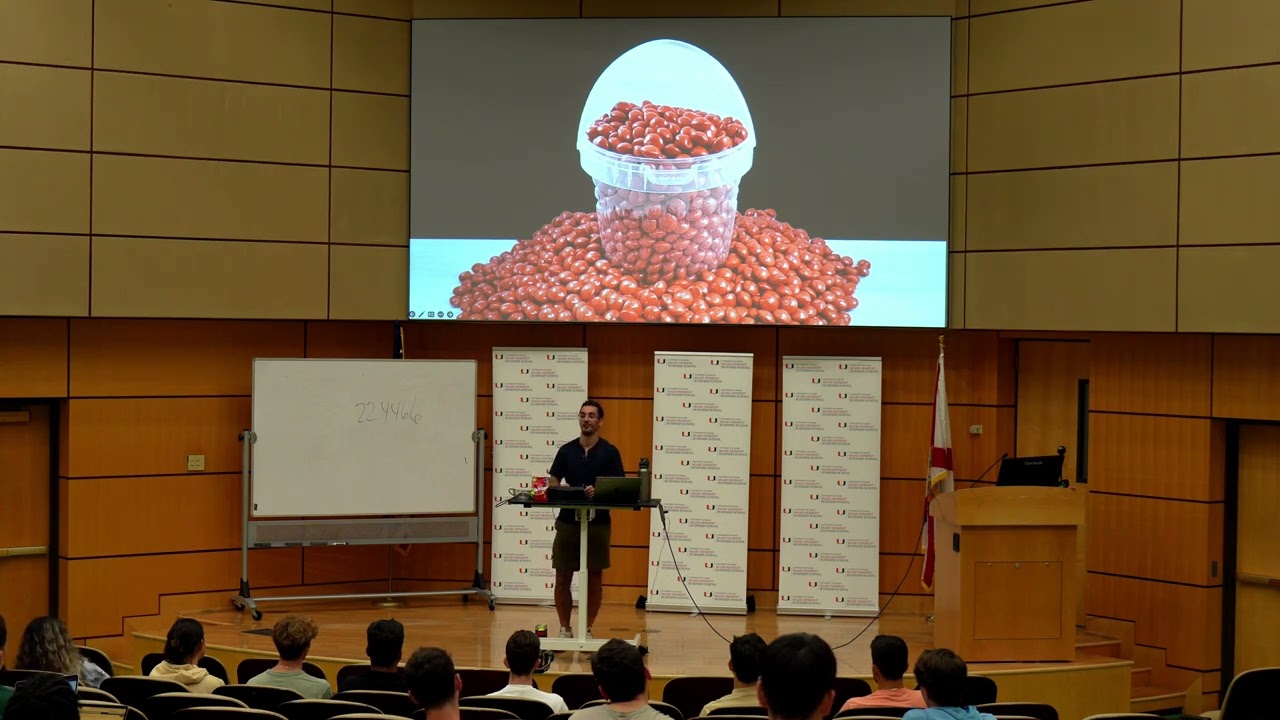
I opened with a quick show of hands: a few people worked at SaaS companies, one was a founder who had raised money, and one was on the investing side. Then a little about me. I’m a five-time entrepreneur, and my last three companies were all SaaS. I bootstrapped some of them, my previous company raised $3.5 million, and at DoorLoop we raised a $30 million Series A the year before this talk and were in the middle of deploying it. The plan for the session was simple: why and how to raise, how not to overspend, and where the money actually goes across marketing, development and support.
Why raise money, and how much
You can bootstrap, raise from friends and family, go to VCs, private equity or angels, or take a loan. Our pattern was to grow organically until we hit product-market fit, roughly $1 million in ARR, and only then raise so we could pour gas on the fire. Growth has three levers, not one: new sales, cutting short-term cancellations (people who leave in the first 30 days) and cutting long-term churn. When we size a round, we take what we need and add about 25% as a cushion, because you almost always spend more than you plan. I don’t like raising much more than that, because early equity is expensive and a higher valuation later means giving up less. Whatever you do, find a mentor or two who has raised before; ours saved us millions in equity.
Needs versus wants
I started with a confession: we had just burned $200,000 on a one-month Google Ads test that didn’t work. The bigger lesson is not to dig a deep hole before you have customers. Launch a minimum viable product, the idea behind The Lean Startup, and start the feedback loop early instead of building in private for three years. Our first office was our bedrooms and our second was a month-to-month co-working space, because an office was a want, not a need. We still hire freelancers on Upwork for roles we don’t need full time, and we waited three years before exhibiting at a trade show. Go to a show as a visitor first and only buy a booth if it earns it.
Branding doesn’t pay the bills.
Revenue, churn and quick cash
Most of what we did at my last two companies was a waste of time; about 20% of it brought in 80% of the results. VCs don’t care about your follower count, so ignore vanity metrics and watch revenue and churn. When cash gets tight, there are two quick moves. First, push your software vendors onto monthly plans; HubSpot asked us for $65,000 a year, annual only, and we got it to $25,000 paid monthly with a 90-day trial. Second, have your salespeople sell annual plans, which bring cash up front and tend to churn less. We also give everyone a Ramp virtual card so every expense is approved, and we make anyone who negotiates for us read Never Split the Difference first.
Deploy with a plan and with data
No VC will fund you without a plan for the money, so when we pitched we had a line-by-line breakdown of the $30 million. After that, every decision on where to spend comes down to data, which is also how you settle disagreements between co-founders. That means tracking everything from day one, even what you don’t use yet: event analytics, Google Analytics, Mixpanel and a good CRM. We use Salesforce because we have an expert in-house, but HubSpot is great for starting out. What you don’t need early on is trademarks, business cards or company T-shirts. If you run out of runway, the company is over, cool shirt or not.
You can’t measure what you don’t track.
Google Ads, developers and 10X support
We raised because we had product-market fit and wanted to hit the throttle. At the time of the talk we were putting $600,000 to $750,000 a month into PPC, mostly Google Ads, which in 15 years of SaaS has been my biggest lever. As a founder you need to know Google Ads well enough to manage whoever runs it; my go-to book is Ultimate Guide to Google Ads by Perry Marshall. The second lever was product: we went from two developers to 25 in a year and were scaling to 50, because competitors are years ahead on features and every missing one costs sales. The third was support. A new company has to be ten times better, so if a competitor answers in five minutes, we answer in five seconds.
Know your numbers
We use CRM data to decide what to do next. Every lost sale gets tagged with the missing feature behind it, and we add up the ARR each gap costs us, which is how our developers’ priorities get set. We also ask whether we can raise our cost to acquire a customer on Google Ads, and whether onboarding or support is too slow. If you aren’t a numbers person, that’s fine, but someone on your team has to be, whether that’s a co-founder, your accountant or your VC’s analysts. Before taking the money, get clear on your salary (ours rose with revenue), whether you need approval to spend, and whether funding comes in milestones. And try not to plan on the next round, because a company with a month of runway gives up far more equity.
What we spent on, and what we skipped
Our marketing went into Google Ads and PPC, plus blog posts and SEO, which by then brought in over half our leads and revenue. SEO takes six to 12 months to rank, so PPC is what got us to eight figures of revenue and 100 employees in two years. I still spend on Google because it pays back within two years, and I keep anything that does. We skipped social media, trade shows, webinars, podcasts and swag, because they didn’t drive revenue for us, though they might for a consumer brand. If you hand your budget to an agency, tie it to revenue targets, learn enough Google Ads to spot nonsense, and hold them accountable.
How much to spend per customer
Test anything that costs less than your cost to acquire a customer, and double down on whatever works. Start with average revenue per customer; say it’s $1,000 a year. Then decide how long you’ll wait to break even. My target is one year, stretching to two or three once the easy channels are used up. At a two-year payback, you can spend up to $2,000 per new customer, which opens up banner ads, small trade shows and affiliate fees; we paid $500 per referral when others in our industry paid $100. I also look at the exit value of each customer, since $1,000 of ARR could be worth $5,000 at a sale. As a rough rule, cost per click is about 1% of what you can pay per customer, because about 10% of visitors become leads and 10% of those become customers.
Improve the funnel and own the top 10
Double your conversion rate and you halve your cost per customer, which lets you outbid everyone else. We A/B test our ads, we have 104 landing pages that have been through 34 revisions, and we invest heavily in sales training, because going from a 25% to a 30% close rate is a 20% jump in revenue. Our two “secrets” are simple. Be everywhere in Google’s top 10 for your main keyword, through ads, review directories like Capterra, G2 and GetApp, and affiliate blog posts, so a buyer who has never heard of you assumes you’re the leader. And optimise conversion so you can afford clicks competitors can’t; we pay up to $110 a click for some keywords. We’ve also raised our prices six times, and I’d never again grandfather a discount for life.
Blog posts and gated content
Our site went from zero to about 230,000 visits a month in two years, largely from blog posts. We research keywords in Ahrefs and Keyword Planner, write in Surfer SEO, and outsource to services like Ranking Articles, which helped us go from nothing to about 1,500 posts against a competitor’s 5,000. The best bottom-of-funnel posts, like competitor reviews and comparisons, we write or commission from top writers, and adding a video to the top of a post sent time on page and rankings way up. AI can draft the rest, but Google now rewards real experience, so edit it and add your own. Gated content, like calculators, templates and cheat sheets, brings us about 3,000 leads a month. My challenge to the room was 100 blog posts a month, starting now.
Development and support
We priced missing features the same way we priced marketing. Losing 300 leads a month over e-signatures added up to about $1 million a year in lost ARR and, at a low multiple, millions in company value, against $1.5 million to hire 10 developers. Remember you’re building a team with product managers, QA and design, not just hiring coders, and the objections never fully run out. On support, we lost customers who waited a week and a half to be onboarded, so onboard the same day or the next. Find out why people churn after onboarding, keep support in-house, and build a help center so customers can answer their own questions; we use Intercom and Cohere. My closing advice was to read books, experiment, fail, learn, repeat, and enjoy the ride.
Experiment, fail, learn, repeat.
Q&A: lifetime value, marketers and exit multiples
Lifetime value is what a customer is worth over their whole time with you. At 4% monthly churn, you lose half your customers in a year, so churn caps what you can spend to win each one. As our lifetime value rose, our acceptable cost per customer rose from $1,000 to $2,500; we aim to get back at least three times what we spend. A solid generalist marketer cost around $75,000 a year in Miami, and agencies should never lock you into long contracts. On exits, SaaS multiples in my experience rise with ARR and growth, from 2 to 3X under $3 million up to 10 or 12X at $20 to $30 million, and T2D3 (triple, triple, double, double, double) is the growth path investors love. In SaaS, buyers mostly pay a multiple of ARR, not profit, as long as you can show a path to profitability.
Q&A: raving fans, first customers and urgency
We track net promoter score every month, and everyone at DoorLoop reads Raving Fans. The rule is to go above and beyond, like spending five hours teaching a landlord accounting when competitors charge $120 an hour for it, until the customer says “wow.” Our first customers came from scrappy, organic work: forums, blogs, networking and every contact we had. Treat your first 50 or so customers as beta testers and build what they need, but set a limit before you become their custom software shop. On closing, we invented a $500 onboarding fee that is waived if you sign up by Friday, and a script resets the sale every Friday at midnight. Urgency, same-day closes and a steady stream of promotions made a huge difference to our close rate.
If you’re sitting on a fresh round, the thread through all of this is the same: spend only on what pays you back, measure everything, and keep customers as hard as you work to win them. The slides are linked below, with extra notes and a few slides I didn’t have time to cover.
Thank you, everyone. I’m going to start off going a little bit fast today. We don’t have too much time, but we will have questions at the end, so feel free to stop me if you want. You can take notes if you like, but I will give you the link to download the whole presentation afterwards, so don’t worry. There are many other tips inside the slide notes, and actually a few slides that I’ve paused for today that we’re not going to have time to get through. So if you want some more notes and some more stuff, I’m going to kind of fly through a few slides, and you can obviously find them later on. Just like you did, I want a quick survey to see who everyone is here today. Just a show of hands: how many of you work at a SaaS company right now? Okay, three, four. How many of you are founders or co-founders in that company? Okay, so I have one, basically, that’s here. And how many of you raised money or are in the process of raising money? Okay. So I’m kind of curious, who is not a SaaS founder, and what do you
do? Let’s go with you in the glasses. Investment side, so you invest in startups? Okay, awesome. Who else? You said you’re at Magic EdTech? Okay, cool. SaaS. You’re in SaaS also? No? Next to you? A startup, okay, cool. All right, so I think I got a general idea. A little bit about me: I’m a five-time entrepreneur, and my last three companies were all SaaS companies. I bootstrapped a few of them. My last company raised $3.5 million. The company I’m running right now, DoorLoop, just raised a $30 million Series A last year, and we’re in the process of deploying it. So, a quick summary of what we’re going to cover today: why and how to raise money, if you should raise money, a few tips that I’ve learned from spending a lot of money so far, so overspending, how to save some money, how
to conserve cash, where to deploy it, and we’ll get into some details with some numbers about marketing, development and support. So, first thing: why and how to raise money. There are obviously a few ways you can raise money. You can bootstrap it yourself, which is what we did. You grow slow, grow organically, and that’s totally fine. That was usually our method for all of our companies until we hit product-market fit, or maybe $1 million in ARR. Then we had the business model figured out and we just needed to pour gas on the fire, which we’ll talk about in a second. Or you can raise from friends and family, obviously VCs, PEs, angels, or get a business loan. There are many different ways; we’re not going to get really into them today. But a few reasons you might want to raise money: I think a few of you are starting your company, so you might need money to launch and build your company. It might cost money for development and stuff like that. Or, like us, we had already started our company and we just wanted to grow faster. We had our five-year game plan, our roadmap of how to grow and where to put the money, but we didn’t want to wait five years and do
that, or grow organically. We wanted to grow a lot faster, so we wanted to raise money to pour into Google Ads, specifically PPC marketing, and development. Or you just need to survive and you need a salary; that’s definitely also a reason. So I already kind of walked through this, but that’s generally what we do here, and I’ll talk about what pouring gas on the fire means soon. There are three main levers you can usually pull in SaaS, and in most businesses, when you want to grow your company revenue-wise. Obviously new sales, but there are two that people frequently don’t pay that much attention to, which we’ll get into: reducing short-term cancellations, or churn as we call it, and long-term cancellations. I’ll define the two. Short-term: someone signs up for your product or service right now and they cancel in the first 30 days. Maybe it’s a free trial period, or they have a money-back guarantee period, but they cancel really, really quickly after the sale. There’s buyer’s remorse, and we’ll get into a few things like that. And there’s long-term cancellation, which is if they’ve been your customer for six months or a year and then they churn. So
we’re going to talk about some ways to help retain them and grow the business that way. I urge you to think about those and not only sales. Every time you lose a customer, you have to replace them, and it costs a lot of money. There are a few different people that will say different things here about how much to raise. Let’s say we needed $30 million; we would say, okay, we need $30 million plus 25%, to give us a little bit of a cushion, because you’re usually always going to spend more than you anticipate. Personally, we don’t ever like selling more than 50.1% of our business, so we can maintain control. Obviously you could still maintain control through board seats, but we won’t get into that. Generally, try to hold on to as much equity as you can in the early rounds, seed round, Series A, Series B, because then you’ll start getting diluted like crazy, and you need some more equity to entice future investors to invest in your business. Okay, so this is a big question: do you raise more than you need? I’m of the belief of no, because you’re going to be giving
away too much equity, especially early on. But some people have a different opinion, that you should raise more. Personally, like I said, we like to keep as much equity as we can now, and hopefully you’ll keep growing and your valuation will be higher later on. So in a year or two from now, if you need to raise again, hopefully you’ll get a better valuation and you won’t have to give up so much equity. That’s our thought process, but some people differ on that. Now, for those that haven’t raised money yet, or even if you’re in the process of it, this is my favorite book by far for raising money and how to negotiate. This will teach you everything you need to know about raising money. Now, I will say it is very important to have a mentor, or two or three, when you are raising money, because there are so many things, I don’t want to call them tricks, but so many things that you don’t know. You don’t know what you don’t know, obviously, and these mentors will teach you. They have saved us millions of dollars in equity. We were able to raise our money and negotiate better with multiple VCs just from having someone experienced who’s been through this before. So I
urge you to find someone like this if you’re going to raise some money. All right, so we’ll get into overspending. Just to give you a fun anecdote: last month, Google Ads was like, oh, you could spend this much more, whatever. We did a test for one month. Yeah, Adrian in the back is laughing; he works with me. We did a $200,000 test that did not prove to be fruitful. That was overspending. We probably shouldn’t have gone that crazy. So there are a few things that I’m going to teach you. The first thing I will tell you is beware of overspending before you get any clients. I talk to a lot of business owners who say, “We’re building our startup right now, but I need to raise money because this integration or partner is $10,000 a month minimum.” I’m like, why are you going to start getting into such a deep hole before you even get your customers? Try to launch in beta, an MVP, which we call a minimum viable product, where you can launch without these things and eventually grow organically. There’s a great book that I will recommend here. I see some head nodding. One of my
favorite books when we first started our company many years ago: The Lean Startup. It will teach you how to be really lean, really scrappy, and even though we have over 100 people in our company today, we still follow a lot of the principles in here. Except last month, we ignored them. But yeah, a very important book. So, some overspending advice. When you raise money, you’re going to want to do a lot of things, and some things are not that important. There are more wants than needs, and I’ll get into a few examples here. One example: you may want to buy everyone four monitors, or get Herman Miller chairs, or a crazy, fancy office. You don’t really need that. For us, for example, our first office was our bedrooms. Our second office was The LAB, a co-working space like WeWork, month to month, and then we slowly kept growing from there. So we didn’t need an office. We wanted one, but at the time we were trying to be scrappy. Make sure you always prioritize a need over a want. And this is from The Lean Startup: is there an MVP, a minimum viable product version of
what you’re building that you can release tomorrow? Really, tomorrow, instead of waiting three years to launch. Another big problem I see, especially when people are building companies, is they’re building and building and building for years. “We’re going to launch January 1st.” They launch, nothing happens, and they’re like, there go three years of my life. What I always tell people is just launch. Just launch a beta. You can have multiple launches; it doesn’t really matter. Just get the word out there. What you want to do is start that feedback cycle, with your first beta and innovator customers giving you feedback early on, so you can keep growing and learning from there. Basically, you need to listen to your customers more than anything. I love this one, number three. We use Upwork a lot, daily. You might not need to hire that product designer, UI/UX designer, whatever it is, right now: web developer, content writer, social media marketer. There are so many roles you can outsource on Upwork. Even though today we can afford to hire certain roles, we still don’t, because we don’t really need a full-time role; we can just use Upwork. So we use Upwork extensively.
It’s great, if you haven’t heard of it. There are basically millions of freelancers around the world that you can hire for very, very affordable rates. And then trade shows; we’ll get into a few things. Not every industry’s trade shows are good. You might want to go to them for branding or exposure, and we’ll get into that. But we held off for three years before going to our first trade show, because it wasn’t always that profitable. My advice for trade shows specifically: attend them first, for free, in person, without exhibiting, and see if you’re the right fit. You could actually meet a lot of good customers and get business without even having a booth. And then if it’s a really great show that you need to go to next year, you’ll be better prepared to go to that show and spend $5,000 or $10,000 on it. If you don’t need to, don’t; need versus want, once again. Yeah, I think this line here was funny: “I’ll go bankrupt.” I love this line, and some people don’t agree with me, especially some friends in the audience: branding doesn’t pay the bills. I love saying this because in the beginning you might be doing things that aren’t super important, like posting a
lot on social media and getting followers and whatever. But if they’re not converting into paying customers, don’t focus on it. That was probably the biggest thing I learned from my last two companies: 80% of the things we did were a waste of time, and 20% of the things we did brought in 80% of the results. It’s the classic 80/20 Pareto principle. So try to really focus, see what is working, and then just double down and, like I said, pour gas on the fire. This is a funny slide: what do VCs care about? Obviously money, sure. And what do they not care about? The number of followers you have. It’s vanity metrics. Try to only focus on metrics and KPIs that are actually driving towards your end goal, which is revenue, obviously. You should only care about one thing: revenue. And also churn. It’s not just about bringing in a lot of customers; it’s also about retaining those customers, which I really want you to think a lot about. So, cash reserves. If you are running out of cash, or you’re a little bit nervous about your projections, there are a few tricks that
we’ve used whenever we needed to boost our cash instantly, within 24 hours. There are some tools, platforms and software that you’re going to be using, for example Intercom, Outreach, Salesforce, whatever it is. A lot of them will try to get you to go annual: “We only have an annual plan.” It’s usually not true. If you push hard enough, they will open up a monthly plan for you. For example, HubSpot wanted $65,000 a year from us last month, annual only, and we got them down to $25,000, paid monthly, and we even got a free trial for the first 90 days. So you can always try to go monthly, which will save you some money in the short term. The second thing is you can push your AEs, which stands for account executives, or salespeople, to sell annual plans. You don’t only have to sell month to month. This is specifically for SaaS businesses: you can sell annual and you’ll get a lot of cash up front. Generally, what I’ve learned is that annual plans churn less. They’re more likely to stick around in the long term, because they’re committed;
they put a lot of money out of their pocket. It’s probably a little bit harder to close, but they have a significantly lower cancellation or churn rate. Okay, Ramp is one of our favorite new tools in the last six months. Every employee and every manager in the company has a Ramp virtual credit card, and before they can make any expense, you have to approve it. So it really keeps you super organized with your expenses, and you can set budgets. I’ll give you an example: yesterday we had three people at a trade show, and they were checking into the hotel. “Oh shoot, I didn’t know we had to pay the hotel bill now. I thought it was paid. We need $1,200 right away.” She Slacked me, and within a second I went to the app and added $1,200. Done. Try the card again, and it worked. So it’s very cool. With Ramp you can have unlimited virtual cards, and we use that for a lot of things. Now I’m going to say this again: negotiate everything. There’s an amazing book that I’m going to show right here, Never Split the Difference, one of my favorite books for sales. It’s very important that if someone in your company is buying software, doing
anything, they are good at negotiating. We have a lot of people right now negotiating different platforms, tools and software, and we make them read this book before they negotiate anything, and we also help them and get involved with them. If you’re not good at sales, if you’re not good at negotiation, you shouldn’t be doing it. Just make sure you read this book, or they read it, and negotiate everything. Everything is negotiable. You’d be surprised: I’ve negotiated with Salesforce and with every company you would think it’s not possible to negotiate with. So you can really try. All right, getting to the second part of the presentation: where to actually deploy the money once you’ve raised it. I love this quote; I think it’s from The Art of War. Really, really important, cool book: “Tactics without strategy is the noise before defeat.” I like to think of this from a VC, raising-money point of view: you have the tactics, meaning you’re raising the money, but you don’t have the strategy yet. Obviously none of you here are going to be able to even raise money if you don’t have your game plan or your pitch deck figured out. So I’m assuming if you’re raising money, you probably already know where you’re going to invest that money, and no VC is going to give you money unless you have
figured that out. For us, when we were pitching: what do you want to do with the $30 million? Well, here’s the breakdown: $10 million for marketing, $15 million for this, and we had it line by line, what it’s going to be used for. You should also have that plan ready to go, obviously. For me, investing your money is all about having the right data to make the right decisions on where to invest it. As a company, especially if you have partners and other co-founders, everyone’s going to have different opinions, and the way to resolve all of them is just based on data. Do whatever the data is telling you, and I’ll get into data a lot more. A big part of data is having really good CRM software. And obviously I love this quote: you can’t measure what you don’t track. So track everything, even if you don’t use it right now, because I promise you, down the road you will use it. That means event analytics, Google Analytics, Mixpanel, whatever it is. Track as much as you can, because you will use it eventually as you grow, and get a great CRM to track everything. There are numerous CRMs out there. We use
Salesforce, just because we have a Salesforce expert in-house. I don’t necessarily recommend it if you’re just starting out; it’s very complicated. HubSpot is also phenomenal. I think there’s also a sales CRM company speaking here today, so there are a bunch of sales CRMs also. There are a lot of good tools out there, and you can obviously grow out of them, and that’s totally fine. In the beginning you don’t need to build a world-class CRM from day one. A lot of people overthink too many things. I have friends that call me: “Oh, I want to start a business. I’m going to trademark it tomorrow.” Your trademark? You haven’t even got your LLC yet. There’s no need for a lot of these things. “Oh, where do I get business cards from?” Why do you need business cards? We didn’t have business cards for two years. So you don’t need a lot of these things; they’re not that important in the beginning. And I’ll mention one more thing here: swag, for example. “Oh, I’m going to buy company shirts, I’m going to do this.” It’s not important in the beginning. Really try to only focus on things that are going to bring you revenue, because if you run out of runway, you’re dead. The company is over.
You might have a cool T-shirt, but the company is over. So this is why we raised money specifically: because we had already hit product-market fit, we wanted to just pour money in and hit the throttle, the pedal, whatever, on marketing. $600,000 a month is going towards PPC. That number has gone up now to about $750,000. The majority is Google Ads, and that’s what I’ve found in SaaS in the last 15 years: Google is my best friend. Master Google Ads. It is probably the biggest lever you can pull, and as a co-founder you need to master Google Ads, because you’re probably going to be getting into it yourself. You have to know enough to be dangerous, and also be able to manage the employees, freelancers or agencies that are doing it, so you know what to do. There’s a great book I did not put up here called Ultimate Guide to Google Ads by Perry Marshall. My favorite book. It’s like a textbook, and it teaches you everything. Master Google Ads; it’s very, very important. If there’s anything you learn from this class today, it’s mastering Google Ads. It’s your number one growth lever.
Ultimate Guide to Google Ads by Perry Marshall. Yes? [Inaudible audience question.] So, every industry is slightly different, every market is different, and the keywords and competitors are different. But what I’ve found is if you’re really good at Google Ads, you can really make it work for almost any business. If your target customer and market are searching on Google with certain keywords to find businesses like yours, then you can advertise on Google Ads, and if your competitors are there, it’s probably working for them. So this is huge for us. Double down on Google Ads; it’s the best thing I could tell you, the number one way you’ll make more money. There are of course also other directories. Bing Ads, you’ll probably spend 10 times less, but it also works. There’s also Gartner, which we’ll talk about in detail, and social media marketing. Product is another big lever that we pulled, and I’ll explain why soon, but we invested a lot of money into growth and development. We went from two developers
to 25 in a year, and now we’re scaling to 50. Development is a big lever for us, especially in SaaS, and probably for you too, because especially when you’re starting out, your competitors are probably years ahead of you with their product. They have many features you don’t have, and you need to get those core features in, otherwise you’re going to be losing customers all day long to objections and rejections on features. So the more developers you have, the more features you can build, and the more sales you’re going to close. That’s how we look at it from a value point of view, but I’ll cover that in a bit. And lastly, support, obviously super important for us. We’re always aiming for live support, as quickly as possible. When you’re starting your company, you have to be better than your competitors, and not just better: 10 times better. What is it, Grant Cardone’s 10X? You’ve got to 10X your support, you’ve got to 10X everything, because you’re new. No one knows about you, so why should they go to you versus a company that’s been around for 20 years? So in this case, we wanted to have the best support ever and the easiest-to-use software. Those were our two main
differentiators. We get them to our site with good marketing, but then we keep them in our company with incredible, world-class support. If our competitors are answering their phone in five minutes, we’re answering in five seconds. If you chat with them and it takes them 10 minutes, it’s going to take us one minute. We have to 10X everything they’re doing; that was always our goal. And I’m going to keep mentioning this: it’s not only about new sales, it’s also about reducing churn and retaining customers. So, making data-driven decisions. These are some examples of ways that we use the data in our CRM to decide what we’re going to do. Number one: are we losing sales for missing features? I’ll talk about it now anyway: every day we’re losing sales for missing features, and every day you will also lose sales for missing features. There’s always a feature someone’s looking for. In your CRM, and I do have a slide on this, you should be categorizing and grouping all your missing features. Maybe there are 20 of them. Group them, and every time your salesperson loses a lead for that reason, they mark it and group
it. Then what you’re going to do is analyze all of them and decide how much revenue, how much ARR, how many sales and customers you’re losing for every one of these features. I’m going to show a slide in a second, and that’s why we prioritize features above almost anything else with our development team. CAC, that stands for cost to acquire a customer: can I increase the cost to acquire customers on Google Ads? If you can, and we’ll get into that, you will rank higher in Google and you’ll get more customers. That’s another way that we use data to look at ROI. Onboarding, we’ll get into that also: does onboarding or support take too long, or are we missing something here? So the more data you have and the more you analyze it, the better decisions you can make, and these are some of the questions that we ask ourselves. Live support, we’ll get into that also, but it’s super important. A lot of founders are not number-oriented. They don’t like finance, they hate QuickBooks and accounting, and that’s totally fine. If that’s you, it’s okay, but you need to have someone on your team that knows the numbers. It can be another
co-founder, or it could be your accountant, or it can be the VC. VCs are willing to help; don’t be afraid. They have teams of quants who went to Harvard, who are geniuses, and they know more about your business than you do, trust me. They will be more than happy to help, and sometimes they have people on staff who can help you for free. So this is very, very important: you must know your numbers. And when in doubt, don’t be afraid to ask your VC for help. That’s what they’re there for. They’re there to help you; they want you to grow, they want you to succeed. They’re your partner. If you do well, they do well, obviously. Now, a few questions to ask yourself when you raise money, and the VCs will ask you this also. Are you going to pay yourself a salary, and if so, is it going to increase over time? I recommend that it does. We historically based our salary on revenue: the more revenue and the more ARR we generate for the company, the more the company’s making, and we should also get a little bit more of a salary ourselves. That’s how we did it, and the VC was fine with it. Do you have
permission to spend freely? Great question to ask the VC: do we need your permission if I want to try something on Google Ads for a month? Do I need approval of where I should be spending the money? This is an important one. Sometimes VCs will say, “We’ll give you $20 million, but we’ll give you $5 million now, $5 million when you hit $5 million ARR, and another $5 million when you hit $10 million.” They give you milestones to hit. It’s the same thing when selling your company; they do that too, and it’s called an earn-out. So you also want to ask that question. And also ask yourself this: do you plan on raising a Series A, B, C, D? Do you plan on raising more money? My advice is try not to plan for it. Try to sustain yourself with the money that you have now, otherwise you’re going to be in a really hard position to raise more money, and VCs will take advantage of this. If you’re in a really desperate position, with a month of runway left, they’re just going to take more of your equity, because they know your business is going to die without them. So try not to be in that position,
and try to sustain yourself and not run out of money. Don’t run out of money; you’ll be in a really bad position if you do. I already mentioned this, so these are a few things we focus on specifically in marketing. Google Ads and PPC, we’ll dive more into that. Blog posts and SEO are big for us: over half our leads and revenue now come from our blog, believe it or not. We’re spending $7 million a year on PPC, and still half of our business is free traffic from our blog. I’ll get into blog posts in a sec. Yes? [Audience: “Your blog posts, is that an internal hire?”] Great question. I have a slide on this, but yes, we do both. Now we have internal hires, but in the beginning, when we couldn’t afford it, Upwork. There are some websites; I’ll give you Ranking Articles today. You’re very lucky, because you have AI, ChatGPT, so you can do a lot of the work that we did manually with AI and just make it a little bit better yourself. Yes? [Audience question about why DoorLoop still spends so much on PPC.] Great question. So in the beginning,
SEO takes time. A good blog post could take three, six, 12 months to rank. So on day one we’re not getting any leads from SEO, not even by month six. In the beginning we were very good at inbound marketing, so we started with PPC, which is why we were able to grow so quickly. In two years we hit eight figures of revenue and over 100 employees, thanks mostly to PPC. Today, even though we still get a lot of traffic from blog posts and SEO, why wouldn’t I still spend the $600,000 a month on Google if it can still bring in a return on investment? I’m still making my money back in one or two years. I could drop it, but then I’m losing all those leads and revenue. So to me, I’ll keep doing everything. If something is making me money, and making me money back within a two-year payback period, which is a 50% ROAS, I’m going to keep doing it forever, basically. We’ll get into that a little bit later also. These are some things we did not focus on. Social media: was it important? It never brought in results, so we’re not going to do it. I set up the
accounts and did some basic posts, but we didn’t focus on it, because it didn’t drive traffic and it didn’t drive business for us. For some of you here, that’s all your business, so go in on that. Maybe Google Ads isn’t the place for you. Maybe it’s DTC e-commerce; go hard on social. But for us it never was. Trade shows: we also knew they weren’t going to be a big revenue driver. You might go to a show, spend $5,000 and get one customer. It’s just so slow; it’s a lot of work, a lot of time and money, so we didn’t go in on that at all. Webinars, podcasts, thought leadership content, all that great stuff is not important in the beginning, at least for our businesses. Now we have it, but in the beginning you don’t need to focus on that. You need to focus on sales and revenue. And I put swag there too. So we’re going to get into the marketing aspect now. I hope I don’t go too deep; if I’m getting too confusing, just let me know. This is a great quote I love, and it’s not my quote: “Half the money I spend on advertising is wasted; the trouble is I don’t know which half.” A lot of businesses are like this. They don’t track anything. You need
to know every single penny you’re spending. You need to track it, analyze it and know where it’s going. It’s very helpful if it’s your own money, if you have some skin in the game, because you’re going to want to track everything and know the results. I urge you to know the numbers backwards. Don’t care about vanity metrics, how many of this, how many of that. It’s all about conversions. Sure, MQLs, SQLs, leads and demos are all important, but conversions are the name of the game, and revenue and ARR. I’m going to mention this: you must have a killer marketer on your team. If you’re raising money, especially millions, and you’re going to be dumping it into Google Ads, you must have a killer marketer on your team. It could be you, it could be a partner, and if you don’t have anyone, I would look into an agency. There are great marketing agencies that have landing page designers, conversion rate experts, copywriters, graphic designers, photo, video and Google Ads experts. They have teams ready in place for you to launch and scale. And I’m just going to drop my friend’s name in here. We used him in the beginning. He’s
awesome; he knows everything that I do about this stuff: Cast Media, a great company. Yes? [Audience: “How do you assess a great external marketing team?”] Great question. So if you hire a marketing agency like this one, for example, how do you know they’re doing a good job? Number one, they need to be tied to results. “Hey, marketing agency, we want to spend $5,000 this month on Google Ads. We expect $5,000 back in revenue this month, or at a minimum $2,500, so we’ll make our money back in two years. That’s what we expect. You need to bring us enough leads to drive enough conversions for that much revenue.” Tie them to revenue goals. Number two, they could always say, “Oh, but the traffic, the keywords…” That’s why it’s important for you to be dangerous in Google Ads and PPC, so you know if they’re BSing you, and you can also give them more information on what to do. You’ll have the strategy. You’ll know more about your business than they ever will, but you
need to let them know, because they don’t know your business as well as you do. Hopefully that answered it. Hold them accountable is my biggest thing. And some agencies will work with you: “We can work on a retainer, but we’ll also work on a pay-per-lead basis. We’ll bring in qualified leads, whichever ones you deem qualified, and you can pay us $200 for that lead.” Okay, so some general rules for increasing marketing spend that we follow. Test everything that comes your way, as long as it’s under your cost to acquire a customer. You need to figure out how much you’re willing to spend per new customer, and I’m going to get into that in a second. And then double down, quadruple down, 10X down on any sources that are working. If you start Google Ads and it’s like, oh wow, it’s working, we’re getting leads, go crazy. If I spend a dollar and make a dollar back on Google Ads, I’m going to spend a million dollars and try to make a million dollars back on Google Ads, and $10 million, or whatever it is, until the point of
… whatever the word I’m trying to say is. You get what I’m saying. Okay, make sure you track everything; we already mentioned that. And decide how much to spend per client. This is very important. A few questions you want to ask yourself. What is your ARPU, average revenue per user, or your average ARR per customer? Every year, how much are you earning per customer on average? If you’re charging $50 a month on average, you’re making $600 a year. Let’s say the number is $1,000 a year per customer. For me, that’s your magic number: $1,000. Can I do this marketing campaign or this test for $1,000? All I need is one customer for that. That’s all I need. So we try everything that comes our way, for the most part, if it’s under $1,000, for example, or $2,000. You need to know your churn rate, your cancellation rate. There’s something called lifetime value, which I won’t cover now. It’s a calculation, but it’s also very important. And this is a big one that we always think about: what multiple are you planning on selling your business at? Now,
obviously the multiple is based on your ARR and also your growth rate, but it can range anywhere from 3 to 12X annual recurring revenue. So if you’re making $5 million a year, you could sell your company for, let’s say, $10 to $50 million, depending on your growth rate, the market, the buyer, stuff like that. I’ll get into multiples a little bit more in a second and tell you why. And then this is my favorite question: how many years are you willing to wait to break even? My magic number is always one year. If your average customer is $1,000, I want to break even and make my money back in one year. That’s always my goal in the beginning, when I’m starting. Now we’re trying to grow more, and we’ve already exhausted everything, so we’re pushing it to two years, or three years even. But one year should be your payback period if you can. So here’s some math: if you make $1,000 a year per client and you’re willing to wait two years to make your money back, you should be able to spend up to $2,000 for every new client. When you think like this, a world of possibilities opens up in marketing. For example, what can you test with $2,000?
You can do a banner ad on an industry website, you can do a small trade show or print ad, you could pay referral or affiliate fees of $2,000 for every customer they bring in. This is a big one for us. Everyone in our industry is paying out $100 if you refer a customer, or $50, $20. I’m like, that’s crazy. We’re going to pay $500. Who’s not going to sign up to our affiliate program? Sometimes we’ve tried even more, $1,000, and you will get referrals if you amp it up like this. It makes sense: it’s a free lead, so why wouldn’t I just pay them that cost? I’ll make the money back. A lot of people don’t think about it like this, so I definitely urge you to. With everything that comes in through your door, ask: can I make the money back? Now, I love this: always calculate your exit return. I like this because you’ll say, okay, I brought in $1,000 of ARR, but I’m going to make $5,000 from that when I sell my company. So you’re always thinking ahead to the future, to your exit multiple. So always
think about the exit when you’re thinking about this. Now, just a show of hands; I’m kind of curious what people think. If I could spend $2,000 to get a new customer and I’m advertising on Google Ads, how much should my cost per click be on average? Any ideas? [Audience: “$1,000?”] No, per click. There’s actually a formula, and it’s a really simple formula. [Audience guess.] No. It’s usually about $20 a click. It’s usually 1% of your cost to acquire a customer. How did I get to these numbers? I don’t have the slide here; it was too complicated. But basically, the average conversion rate from a click to a customer is usually 1%. Ten percent of people who come to your landing page will fill out a form and become a lead, schedule a demo, start a free trial, whatever it is, and 10% of those will eventually become paying customers. So a hundred people come to your landing page, 10 become leads, and then one signs up. So it’s usually 1%. When you think about the 1% rule, it’s a really easy mathematical rule.
Check this out: if you can afford to spend $1,000, your cost per click is $10. $2,000, $20. $3,000, $30. It’s really easy, simple math. So when you’re looking at Google Ads, or anywhere, and you want to know how much you can spend, just use the 1% rule. It’s a super quick and dirty way to do it, and it’s accurate 90% of the time. Now, this is interesting: what if you can double your conversion rate? You have a better landing page, you’re A/B testing it, you have a better sales cycle, whatever it is. If you can double your conversion rate, you just made double the money. You cut your costs in half, and now you can outbid your competitors. You could spend more; there’s a lot you can do. So I urge you to really improve your funnel, and there are a few steps that we take on a daily basis to improve this funnel. Number one, you can A/B test your ads right in Google Ads. Especially A/B test your ads: run multiple ads, with different copy, different images, different headlines. There are a million different ways, and every percent will make you millions of dollars. Number two, A/B test your landing
pages. We have 104 landing pages on our site, and we’ve gone through 34 revisions of different versions of the landing page. Always be testing. Like “always be closing,” always be testing; same methodology here. Number three, sales training. Super important for us. If you’re converting 25% of the leads that come in, and you convert 30%, which is only five points more, that is a 20% increase in the amount of money you’re going to put in your pocket. So I urge you to focus a lot on sales training. What we did was purchase a SaaS sales training course online, from this website over here, Demo to Close. They have SaaS sales training courses. I couldn’t find anything else online but this one, and luckily he’s also one of my good friends, so I got a good deal. Every single salesperson watches these courses and gets trained, and we ended up hiring him to coach and train our entire sales team and write playbooks, scripts and videos. So if you don’t have something like this on your team, find that person or outsource it. And he’s actually
here today, if you want to raise your hand. You can say hi to him later if you like. But sales is super important: the more you convert, the more you’re going to make. All right, has your brain exploded yet? Yeah? No? So, our secrets for success. This is it, just two secrets people ask us about. Number one, be in the top 10 of Google as much as possible, and invest as much as you can in PPC. When you’re a new company, no one knows about you, but they’re searching Google. I had a slide, but I think I lost it. When they search Google for, in our case, property management software, the top three results are Google Ads, and we’re in one of those results. The top 10 are directories, Capterra, Software Advice, GetApp, Gartner, G2, whatever it is, and we’re in all of those. Another few are blog posts with affiliates; we gave them $500 per lead, and we’re in all of those. So now if you’re looking for software and you’ve never heard of us, you’re going to see DoorLoop, our company, everywhere in the top 10, and you’re just going to assume, wow, they must be great. They’re number one, they must be awesome. What
they don’t know is that we’re paying to be number one. But it works almost immediately. To them, you’re number one, you’re the best: “I’m signing up with your software.” So that was always my strategy: be everywhere in the top 10. I urge you to go after this. Go to Google, type in the number one keyword people use to find you, look at the first 20 results, and try to get onto as many of them as humanly possible. Yes? [Audience question.] All right, so the question is what percent of revenue you should commit to being number one on the SERPs, on Google Ads for example. For me, it’s not a question of percent of revenue. Being in the top three on Google is called top of page, and it’s all about how much you can spend to make your money back in one or two years. The problem is that when you’re new, your price is probably lower than your competitors’, and you probably don’t have conversion rates like your competitors, so it’s going to be very hard to outbid your competitors. They’re
probably going to dominate you in the beginning. They can probably bid $50. I’m paying $110 a click for some of my keywords, $100 a click, but our conversion rates are so good that we’re converting one out of 10 of those. I bet you our newer competitors are not. They can’t afford $100 a click; they’re not optimized like us. They can afford $10 a click, so they’re going to be at the bottom of Google. They’re going to be buried. So it’s really important that you optimize your conversion rates, because then you’ll be able to spend as much as we can. And also increase your prices as you go. We’ve increased our prices six times. The more you grow, the more features you add, the more confident you get in the market, keep increasing your prices. We never increase prices for existing customers. We will eventually, and that’s one lesson we messed up on in our last company: we grandfathered everyone in for life, which is a huge mistake. Don’t do that. If you’re going to give them a promotion, make it 30% off for year one only, or year two, but never for life. That will be very helpful when you sell your company, also. All right, so I’m just going to throw up a few slides quickly. It’s going to be
in the presentation. These are some directories that we’re on, and you should also probably be on your industry’s directories. You can take a picture, but it’s also in the slides. So these are a few of them; I’m not going to get into this. Oh, you want me to go back? All right. This might not be for you, but you want to search Google for your keyword and look at the top 20 or 30 results, and if these are on there, get on them. They will work for you most of the time if you have good landing pages and conversion rates. Now, this is too advanced, and I’m not going to cover it right now, but it’s going to be in here for later. There are a lot of good Capterra tips; Capterra is a big source also. These are some sources that you could try, with some estimated budgets from what I’ve spent over the last 10 years, so you can kind of see where the money falls. Google Ads is number one, and that can go up to $1 million a month, even more, depending on your market. I’ve spent as much as $600,000 a month on Google Ads. Capterra, you can also go up to $150,000 a month. These are some serious channels. Bing is usually
not that expensive. Blog posts and SEO are really cheap, but there’s a huge ROI in that. So there’s a bunch of stuff you can do here, and this is another slide with a lot more marketing ideas. I’m just going to leave it up; it’s in the slides. There are so many things you could try. Try everything; that’s my advice. I’ve tried Quora, Reddit, LinkedIn. They didn’t work for me, but I tried them. You’ve just got to try everything. Okay, getting to blog posts. This is our traffic growth from Ahrefs. It’s not accurate; ours is actually double this. We went from zero visits to our site to, right now, 230,000 visits a month in two years, and you can do this just with the power of blog posts, good content and SEO. Now, don’t just write blog posts if you don’t know what you’re doing. Master it, figure out how to write SEO-optimized blog posts, or outsource it. You asked in the back who I outsource it to, so there are a few ways. These are some of the tools we use. It’s really simple if you master it. I was
cranking out a hundred blog posts a month myself, just from outsourcing it and publishing it. It’s really quick. There are some SEO tools for keyword research. We use Ahrefs, but all of those are really good. Keyword Planner is free, and it’s one that I use most of the time also. Thanks to AI, we use Surfer SEO. It’s one of my favorite tools in the world for writing really good SEO-optimized blog posts, and last week they just came out with Surfer SEO AI: really well-optimized blog posts written by ChatGPT with their algorithm and their prompts. It’s really great. It’s like $25 an article, but it’s still worth it, in my opinion. We bought 320 articles last week from Surfer. When we looked at our competitors, they had 5,000 blog posts, and we were like, holy cow, how are we ever going to do that in our lifetime? By outsourcing it, by using AI, whatever it is. So now we’re catching up; we have about 1,500 in a year. You can do this too. Or you can outsource it. We use Ranking Articles, one of my favorite websites. They’re also very good. They
have three packages, and we chose Elite, which is the best writers. There are so many ways to outsource it, and we use a combination of them. We write our own blog posts now, we use Surfer SEO, and I just outsourced 37 articles to Ranking Articles two days ago. There are many different options. Yes? [Audience: “How do you decide which posts go to which writer?”] Depending on which writer? Basically, we look at our best bottom-of-funnel keywords and competitor blog posts. We have a lot of competitors; for example, our top two competitors are AppFolio and Buildium. So one of our blog posts is “AppFolio Reviews and Pricing,” and people are searching Google, they’re going to find it, and they’re going to come to our website. Another one is “AppFolio vs. Buildium.” The competitors hate us, but it works and brings in traffic. For those super bottom-of-funnel, good blog posts, our main keywords, we’re either writing them ourselves in Surfer SEO or outsourcing them to the best writers, and we spend a lot of time on those articles. With the outsourced ones, they write the article, we just publish it, add the image, create the thumbnail, and that’s it.
Another advanced tip, if you want to get into it: you can also add a video, which helps a lot. For our best blog posts, we now add a video to the top of the post, which just dominated SEO, because people were spending five minutes on the blog post and now they’re spending 20 minutes, and Google’s like, whoa, what’s going on? Engagement went up, bounce rate went down, and the rankings went up like crazy. And now we’re creating videos for every blog post automatically with AI, with a program called Lumen5. It takes 10 minutes and just pumps out a video for you. That’s a little pro tip there. If the article is not so important, then we’ll just let AI write it. AI is tricky; we haven’t really written that many articles with AI, so I will tell you to use caution. You can write it with AI and then analyze it, review it, edit it and make it good. The most important thing I can tell you is that Google now looks for E-E-A-T, and the new E is experience. They want your personal experience. They don’t want AI. They want you to write, “In my experience, this is the best software; I’ve tried all of them.” That’s what they look for: your
experience. So this is your goal. If you can do this, you will get as much traffic as we do. This is your challenge: publish a hundred blog posts a month. It sounds insane, and it is, but you can do it if you’re outsourcing everything. And the second one is a big one: we get about 3,000 new leads a month just from people downloading our gated content and resources. You can go and look at our whole collection at doorloop.com/resources. We have a ton of different calculators, white papers, ebooks, free templates, whatever. You’ll get a lot of ideas; we do it all. And then we link those to the blog posts. So people come in looking for an accounting cheat sheet: here’s your cheat sheet, download the template, and give us your email, your phone number and your name. We ask a few questions, so we’re actually really qualifying them here. That’s what we do. Gated content takes a lot more time to produce in the beginning, a lot more time. You can’t really outsource it. You can, but we haven’t. But it will bring
in a lot of results later on. So invest in SEO early, super early, like right now, because it takes months or years to grow and actually rank. All right, we have two sections left: development and support. So, product development. Development is super important. The first thing I would tell you to ask yourself is: how many leads did you lose for missing features? How much ARR did you lose? Is it worth it to hire a developer for the missing features? How many developers do we need for all these missing features? These are questions that we asked ourselves, and we were like, whoa, we’re losing 300 leads a month over e-signatures, something any developer can build. 300 leads a month is $60,000 of ARR a year; that’s $600,000 in valuation. Oh my God. So this is how we did it. We said, okay, we’re losing this many leads, we’re losing $1 million of ARR. Assuming a very low multiple of 4X or 5X, we’re losing $6 million in company value every single year from one feature, or from these features, and it will cost us $1.5 million to hire 10 developers. It’s a no-brainer; we’re going to do it.
So that’s how we think about development and features. We already spoke about this, so I’ll kind of skip it for now. Now, don’t think that just 10 developers are going to solve all your problems. You need to build a development team: there are product managers, there’s QA, there’s UI/UX. So it’s not as simple as just hiring 10 developers. For every five, we need to hire a product manager; we’re kind of building teams now with that. It’s not so simple, and it’s hard to find good developers, but you’re in Miami, you’re in The LAB, so hopefully you can find good, talented ones. I would urge you not to outsource it to India or anything like that; you won’t get great results. Development is super important, especially in the early days. You don’t want code bloat. You want great, clean code, or you’re going to shoot yourself in the foot as you scale. And it costs money; developers are expensive. The second thing: you might also think, wow, if we just knock out these 10 main objections, we’re going to close everyone. Not the case. There’s always going to be another objection, there’s always going to be another reason, so just keep that in mind.
Fair warning in advance. Any questions on development? All right, support, the last section. This is a big one for us. We were losing a lot of customers pre-onboarding. What that means is: today’s Wednesday, and I signed a customer up today, but we didn’t have a big enough team to onboard them today. “Oh, let’s schedule your onboarding for next Friday,” a week and a half from now. But the motivation is hot right now. They want us, they want to get going now, and now they’ve got to wait a week. A week goes by, they lose the motivation, they don’t show up to the onboarding or the training, they don’t give you their data, and that’s it. They churn, they’re gone, they cancelled. So my advice to you is onboard them and move them through the process as quickly as humanly possible: same day, if not next day. Fast. So that’s one question. The second question: how many are you losing post-onboarding? They’re in the software, and then we lost them after two months. Why? Figure out why, and fix that problem too. Maybe they’re not seeing the value, and
why are you churning them? Is it features, value, price? It’s normally a combination of those things. And then support is very important. Normally people will leave if you have bad support; they’re unhappy. So really focus a lot on support. For us, these are the people that we hired, and I strongly recommend you consider them. More onboarding people: it’s usually one person who can do it all. We have one person who, when someone signs up, does the data migration, the onboarding and the training, and they could also be doing the support. So that can be one person who does everything. Eventually you’ll build teams, but in the beginning you don’t need to; one person can do it all, and usually it’s the founders doing it. Maybe you need more support reps to give faster support. Maybe you need night or weekend support. I don’t know; it depends on your competitors. Maybe they’re offering 24/7 support. Don’t outsource support. Don’t outsource it to the Philippines. If you want to build a great business, a billion-dollar business, a unicorn, everything needs to be great. You need to have the best people, the best developers, the best everything. So don’t cut corners or cut costs, because it will bite you later on.
For us, number three was a big one. We focus a lot on our help center: tutorials, videos, articles. Every time someone asks us a question, “How do I do this?”, here’s the article. Eventually they learned, and we trained them: don’t ask us the questions, go to the help center first. Surprisingly, the number of tickets coming in month over month has stayed flat, because more people are self-serving. We use Intercom, a great tool for the help center. Intercom has AI built in now, so when someone asks a question, it will recommend articles. It’s really cool; AI is really transforming a lot of things today. These are our two most important tools for support. Intercom helps us with our chat, our ticket system, our live chat, our support articles and walkthroughs: when someone signs up to the software, it will walk them through, click here, now do this, now do that. It’s really cool. You can send email campaigns based on what they’re doing in your software. If they haven’t created a new lead or whatever, send them an email to create their first lead. You can do transactional emails, all through Intercom. Very powerful. They have a startup
plan for startups, so get that. You can get something like half off the first year. And then Cohere is a really cool one. Cohere is instant screen sharing: you can see every user in your app right now, live, and if they chat with you, you can see their screen. It’s very cool, and you can do live support instantly, with no software to install. So Cohere is a big one that we use daily. Final thoughts. Read books. This is the only way I learned any of this stuff. Just read, consume books, consume content, YouTube, whatever your platform of choice is. Just consume content, apply it and learn. There are so many experts giving away so much good, free advice online and everywhere. Just read, consume and learn; that’s the only way you’ll grow. And experiment, fail, learn, repeat. That’s our motto. We’re always failing and learning. Like last month, a $200,000 failure. But we’re learning, the hard way sometimes. Whatever happens, enjoy the ride. All right, thank you.
That’s the link to download it, so if you want to download it, there’s a lot more. There are a few more slides in there that I couldn’t get to, and also a lot of notes in the speaker notes that you can look at. [Audience question about lifetime value and the ratio to cost per customer.] Yeah, so the question was about LTV, lifetime value. What that means is how much money you’re going to make from each customer, on average, over the life of that customer. And you might say, how am I supposed to know? I’ve only been in business for a year; I don’t know how long they’re going to stay with us. There’s actually a formula online. I don’t know it by heart, but it’s something like your churn rate divided by your new sales rate, blah, blah, blah. There’s a formula online, and it will tell you, based on your current churn rate, that every customer should be with you for around five years,
and if you’re making $1,000 a year from them, your lifetime value is $5,000. It’s very important to figure this out, because your churn rate might be high; let’s just say your churn rate is 4%. Every month you’re losing 4% of your customers, which means that if you don’t bring in any new customers, you’re going to lose 50% of your customers in one year and all your customers in two years. That’s why I keep reiterating churn. If your customer lifetime is only two years, you’re only going to make $2,000 over the life of the customer, so you can spend up to two years to make your money back. Lifetime value is very important for that reason: it’s how much you can spend on marketing. The interesting thing is that once you get better at unit economics, your pricing goes up, your churn rate goes down, and everything gets better, your lifetime value will go up. For us, our lifetime value might have been $5,000, maybe now it’s $10,000, and we’re like, oh, now
we have $10,000. I’m comfortable spending $2,500 to acquire a new customer. So my CAC went up from $1,000 to $2,500, and now I can spend a lot more money to acquire a customer. The next question was, what’s the ratio? There is a magic ratio that people strive for. For us, we always want to make at least three times our money back. So if our lifetime value is $6,000, we’re never going to spend more than $2,000 to acquire the customer. That’s very aggressive. Some people want a 5X return; that’s very aggressive. So I think you need to see what makes you most comfortable. VCs will look at that also, obviously, to determine how much money they’re going to make on your investment, because usually they’re going to be paying you a multiple of your ARR, and they want to look at your lifetime value, your CAC, your churn rate. Those are all the numbers they’re crunching, so the better you get those, the higher your valuation will be. Hopefully I answered that. Kind of? Yeah.
Any follow-up to that? Yes. [Audience question about the price of a killer marketer.] Great question: the price of a killer marketer. In the beginning you can’t really afford a killer marketer unless you are raising money. But I would tell you it’s not as expensive as you think. You can get a good marketer for $75,000 a year. You’d be surprised. I’ve had some great resumes and interviews, and I’ve hired people at that price, and they’re pretty good. When I say pretty good, they know Google Ads pretty well, maybe they know social media ads pretty well, maybe they dabble in blogs and content and SEO. They’re never going to be a master of one; they’re going to be a jack of all trades, master of none. That’s okay, but that’s why it’s
important that you, as a founder, also try to master sales and marketing, so you know it best. But I would tell you, in the beginning, if you’re scrappy and you’re following Lean Startup and you’re not raising money, outsource everything. Just delegate. Outsource the blog posts, or try to do it yourself, maybe hire a freelancer on Upwork to help you out, but really do it yourself. You need to be doing it yourself in the beginning. Anything else I could tell you? Yeah, if you’re hiring a marketing agency that does it all themselves, make sure you hold them accountable, and never, ever, ever sign a long-term contract with any agency for six months, because then you’re stuck. You always want to have an out, maybe a 30-day out, and you always want to hold them accountable. And you don’t really need to incentivize them. I haven’t found that I need to incentivize marketers with bonuses, like, if you bring us this many leads, you’ll get X. You can do that; I never had to. But at $75,000 you could find someone pretty decent, in Miami. Remote, maybe a little bit less. Don’t hire in California
or New York; it’s going to be way more expensive. Yes? [Audience question about exit multiples and what drives a higher one.] Okay, so the question is about when you’re selling your company: you can get a wide range of multiples, anywhere from 3 to 20X. It’s just crazy. What I’ve found is there’s a range of multiples based on how big your business is. If you’re only generating $1 to $3 million of annual recurring revenue, ARR, your multiple is normally going to be 2 to 3X, depending on your growth rate, obviously, and everything else, but that’s generally the range. If you’re between $3 and $6 million
ARR, you can probably get 2 to 5X on your revenue. If you’re at $5 to $10 million ARR, 5 to 6X. At $10 million plus it goes to a different number, and then you could probably get to about a 10X, even a 12X multiple, if you’re doing $20 or $30 million in recurring revenue. So it goes up the more revenue you have. There are a few things I look at: revenue, your recurring revenue, how much you’re growing that revenue, whether you’re growing 100% year over year or 200% year over year, and also churn rate, how many customers you’re losing, and lifetime value. They’re looking at a lot more things, but those are the most simplistic things they’re looking at. There’s a great book that I love that talks about revenue and multiples and SaaS called T2D3. T2D3 stands for triple, triple, double, double, double: if you can triple your revenue two years in a row and then double your revenue three years in a row, you’re on your way to becoming a unicorn. So multiples are all about your growth rate, how fast you’re growing, and your competitive landscape. You can also get a higher
multiple if a strategic buyer comes in. If one of our competitors wants to buy us for other reasons, to work our product into theirs, whatever it is, the multiple will go up. So it depends on the buyer also. [Audience question about margin.] Okay, so the question is what I think about focusing on your margin and profit, or EBITDA, to get higher multiples. What I’ve found, and it’s crazy, in the SaaS world specifically, not in other worlds, just SaaS: margin is important, but not as important as annual recurring revenue, marketing and growth rate. Most VCs aren’t really going to be paying you a multiple of EBITDA or profit. They’re paying you a multiple of your ARR, at least that’s what I’ve found in my experience. It’s kind of wild, because in my last company the profit wasn’t so high. If you did the multiple on profit, it was 30X or 40X, it was crazy, but the ARR multiple was five or six X,
for example. You obviously have to focus on some profit. You can’t just be unprofitable; you have to have some level of profit and show that you can get profitable. But in the beginning they’re looking for that growth. They want to make 5X on your company, and if they can see a plan to making 5 or 10X on their investment, they’re hitting it out of the park. They’re raising money from institutional investors to return two to three X to those investors in five to 10 years. They’re not trying to go for home runs; two to three X. And they know that one company will give them a 50X return, and the rest will give them one or two, or even fail. So that’s what they’re looking for, and if they can see that they can do that with your company, they’ll do it. For us, they saw that we were just pumping the gas on marketing: cool, keep going, even if your profit is low, because we’re reinvesting it into marketing. Go, go, go. When you take marketing out of the equation, your margins are usually really high. If I dropped my marketing spend, we’d be at an 80% margin. And they have so many formulas they look at, the magic formula, this formula; they have so many.
They know your business better than you do. So profit isn’t the number one thing I’d focus on. Yeah, great question. It’s all about growth. Yes? [Audience question about building brand loyalty.] How did I build brand loyalty with our customers, customer satisfaction? Okay, so the number one thing that we track, obviously, is NPS, which stands for net promoter score. Every month we ask our customers automatically, in the app or by email: how likely are you to refer a friend to our company, from one to 10? That’s called the net promoter score. If they give us a nine or 10, they’re called a promoter. If they give us an eight or seven, they’re neutral, and then one to six are detractors, whatever. So how do I increase NPS? For us, every person in the company reads a book called Raving Fans. Highly recommended. You can see books are very important. It’s a really easy read, one of the best books ever. It’s so simple and short; it’s
like 60 pages, and it’s all about creating raving fans. And I’m also going to put my contact info here if you want to email me. What they explain is how to grow that hyper-viral loop of referrals and referrals and referrals, and now we’re getting so much traffic and leads and conversions from referrals because we have a lot of raving fans. How do we get raving fans? How do we increase customer satisfaction? By going above and beyond with every single customer. “Oh, we’re not supposed to import that data, but I’m going to do it for you.” “We’re not supposed to customize your website, but I’m going to do it for you.” Yeah, AJ, that’s what he does all day: go above and beyond. We tell everyone, go above and beyond. We don’t care how long you have to spend on it. Go above and beyond; create raving fans. In our business, going above and beyond, we also have something we call the wow factor, and we train everyone on this. We want the customers, at the end of the interaction, at the end of the call, to say, “Wow, they helped me improve my business, grow my business. They care
about me. Wow, they’re giving me unlimited hours.” In our case, we have a lot of customers who are landlords and real estate investors who know nothing about accounting, and we will sit with them for five hours, teaching them about a chart of accounts and QuickBooks and a general ledger. We’re not supposed to do that. Our competitors charge $120 an hour for that; we’re giving it away for free. We’re just giving, giving, giving, and that’s how we have so many raving fans and a high NPS score. Just give as much as you can. If the competitors aren’t doing it, it’s your opportunity to double down and give. You had a question, I think? Yes. [Audience: “How did you get your initial customers, and at what point did you jump to Google Ads?”] Okay, so the question is how we got our initial customers, and at what point we jumped to Google Ads. In the beginning it’s a lot of bootstrapped, organic guerrilla marketing: going on forums and blogs and social media, every network and connection and friend and fan. You’re trying everything, especially if you have no money to spend. You’re just
trying everything: going to networking events, BNI, who knows. You’re trying everything. That’s what we did; we tried everything organic. I like doing that in the beginning because you don’t do those things when you have money. If you raised $5 million, you’re not going to start doing grassroots blog posts, you’re not going to go on Reddit and stuff like that. You’re not going to do it. So I love doing that in the beginning, and then keep it up; we still do it today. That’s probably how we got our first few. And with the first few that ever join your company, there’s that chart, what’s it called? Someone remind me. The first two and a half percent of people that join are called the innovators. They’re willing to take a bet on you. They’re your beta customers, your beta testers. Treat them like your beta testers: “You’re one of the first. Thank you so much. We want you to be a beta tester; give us your feedback,” and you improve for them. “You need this feature? Done, built for you.” Those are your first 50 or so customers. You give them everything, and they’re going to be your raving fans for life, and hopefully they’re going to refer other people. Now, you want to be careful about
building everything for them, because they’re eventually going to get used to it and keep asking and asking. So you want to make sure there’s a cut-off, where you let them know you’re not building everything forever: thank you for the feedback, but we’re not going to start building custom software for you. Eventually, as you start growing your revenue and you have some money to play with, invest it all back into Google Ads, or whatever else you can do. Every dollar: if we made $1,000 a month in profit, it went straight back into PPC. $3,000 next month, straight back into PPC. For us, we knew that we could just do $200,000 a month. We put our own money in, in the beginning. Our first round was a $10 million seed from our own founders and partners, and we went hardcore: $200,000 in month one on Google Ads, because we were experts in it. So we were pulling that lever really quickly, but usually you can scale up from $1,000, $5,000, and kind of go from there slowly. Love it, love that question. [Audience question about setup fees.] So, do we have setup fees? The answer is no, and yes. We never had
setup fees, but we said, you know what, let’s make up setup fees, and then we’ll discount them and give them away for free. So we had no setup fees, and we said, okay, now we’re going to charge a $500 onboarding fee, but if you sign up today, it’s waived. If you sign up by Friday, it’s waived. That’s one of the biggest things I could tell you: you have to add urgency to every sale. It has to be a good sale, a good deal, a good promotion. Have scarcity and urgency. And Mr. Sales Guy in the back, I love the head nodding. Yes, he knows. If you go to our website, /pricing, there’s a sale right now ending Friday: 50% off your first two months, free onboarding, whatever it is. Every single Friday we have a script at midnight that resets it to the next Friday. Every Friday there’s a sale, every Friday the sale ends, and in every demo we’re doing, Monday through Friday: “Wow, you’re starting at a great time. We have a sale ending Friday.” And the urgency helps like crazy. Before, when we didn’t do that, we didn’t close as many sales, and after
that, it was just wildfire. So always add urgency; make up fees. Now we offer this new product, websites: we’re going to build custom websites for you. There’s also an onboarding fee, waived now for you. You need a lot of tools in your back pocket. A lot of them came from him; he’s like, more tools, more tools. You just need more tools to offer to close a deal right now, on the spot. Same-day sale, same-day close. Right now most of our sales are done in a one-hour demo; they’re closed on the spot, on that demo. It’s sort of like the car dealership mentality: if they’re on your lot, you don’t let them go until you close that sale. You get them to close, no matter what. And they’ll make up excuses: “I’ve got to talk to my partner, my spouse.” No. Close the sale right away, on the spot. One more thing I’ll tell you about sales. When we sold our last company, the VC said, “Oh, send us a list of all the coupons and promotions you ever did.” We’re like, all right, whatever. It was like 337 coupons in a year and a half. I’m like, holy cow, we do a lot of sales. We’re always doing sales. Every week there’s a
made-up sale. We just make up our own sales at this point. We have a new feature? A sale. We’re just making up sales; it’s so funny. So just make up sales: every holiday, every excuse, there’s always a sale. Just always do sales, like 48 hours, a lot of urgency. It helps a lot. It also helps push the pipeline through. Probably once every month or two, we’ll do an email blast to all the leads with a big sale. You had a question? Yeah, last question. All right.